My disciplines for this Lent are not modesty-related, but I've had several people approach me this year and last thinking about taking up some form of modesty for Lent. Although this is a little late for your Lenten practice, if you're considering taking up modesty next year or for another reason/season, maybe this will help.
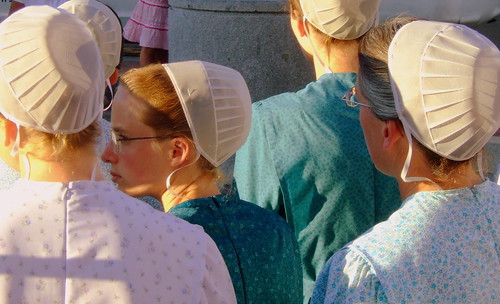
So here we go: basic instructions for taking up modest dressing.
1) Do your research!
And start with your own tradition. I know that sounds hypocritical
coming from someone who chose to go outside their tradition, but I
looked at mine first! It's just about getting to know your options. Many
denominations of Christianity have rich traditions of Plain dress, like
the Mennonites or the Quakers, and many other Christians
have adopted these traditions. Many others have traditions of modesty,
such as the Latter Day Saints (Mormons) or the Pentecostal Church and
Christians from all walks of life consider head covering. For Muslims,
obviously hijab is the main form of modesty, but hijab can mean many
things to many people. Jews have tzniut, but that too can vary in what
people consider to be modest and so you should check out all your
options.
I
also encourage (women as well as men) to look at the requirements for
male modesty in religion. My Woman once said that the only modesty
requirements she ever felt a real connection to were those for Muslim
men-- covering naval to knees. For me, I find that I'm compelled to
cover my head, but I identify more with why Jewish men cover their heads
than why Christian, Muslim or Jewish women cover their heads. In the
interest of equal devotion to God, many Reconstructionist or Reform
Jewish women will cover their heads with kippahs like the men do.
2) If you are adopting someone else's tradition, be mindful of how you present yourself both
to followers of that tradition and outsiders. For instance: is it a
good idea to wear a hijab and a mini-skirt when you go out drinking? I
don't have the answer there. I can tell you, though, that if the answer
is yes, you're going to be explaining yourself to a lot of people.
3) Go shopping! I have to admit, I like this part. :) But it doesn't have to be expensive! If you're going tzniut, check out koshercasual.com, if you're going hijabi, check out alhannah.com. For anything, check out Etsy! And don't forget to check out your local Good Will or second-hand clothes store. But not Salvation Army, please.
4) Do not throw away your old clothes! Unless
you have been debating this move for years and years and years, please
do not throw away your old clothes. I have a couple of reasons for this.
For starters, you never know when you might be able to incorporate your
pre-modesty-modest clothes into your new modest get-up. Check out this hijabi mini-skirt
idea. Secondly, at least for me, that
throw-the-baby-out-with-the-bathwater attitude tends to mean that what
I'm getting into is not actually a calling, but a fad. (Tarot cards in
your teenage years, anyone?) In that regard, I think keeping your old
clothes around gives you a way to ease back into your old life if it is a
fad with as little drama as possible. Again, I'm not saying any one
practice is always a fad, just that bandwagon-jumping is not modest and
if you are looking to practice modesty, one should do as little
bandwagon-jumping as possible.
Those are my thoughts for anyone considering a modest dressing path. Questions? Suggestions? I'd love to hear them!
Showing posts with label head coverings. Show all posts
Showing posts with label head coverings. Show all posts
Wednesday, March 6, 2013
Thursday, February 23, 2012
Light on a Hilltop VS. Hypocrite on the Street Corner
Labels:
Ash Wednesday,
Catholic,
Christian,
head coverings
1 comments
Welcome to Lent, everyone!
Regardless of your religious affiliation, you probably noticed a few people walking around yesterday with ash crosses on their foreheads. Depending on where you are, you might even have noticed priests on street corners handing out ashes.
There's a lot of fuss out there about what to do with the ashes. Do you rub them off afterwords or do you walk around advertising your religion all day? It's actually part of a much more contentious debate in Christianity as a whole, at least in the parts of Christianity I've had a glimpse of. The great debate is: Light on the Hilltop (Matt. 5:14) vs. Hypocrite on the Street Corner (Matt. 6:5). These are both descriptions Jesus has used to describe believers who act out their faith publicly. Since this is something I do on a regular basis with covering my hair, it's something that I'm always wrestling with.
The clincher of the Light on the Hilltop story (it's actually a light in a city on a hill) is this: "Let your light so shine before men, that they may see your good works, and glorify your Father which is in heaven" (KJV Matt. 5:16). "Your light," I believe, is your faith from God so if you are both letting your light shine and doing what God says you're supposed to be doing, it brings other people to worship God. That's important. You're not supposed to be just showing off.
That's where the whole Hypocrites on the Street Corner thing comes in. Jesus specifically mentions that these people get rewarded for their devotion-- this is where the well-known verse about storing your treasures in Heaven comes in. If you're getting praised just for practicing your faith, well, obviously that's not the goal. I feel like it's pretty easy to tell these people from the ones above (although it's maybe much harder to identify the difference in ourselves). The hypocrites just seem slimy and unctuous and they're more likely to put you off the faith than turn you on to it.
Now, if you're concerned you might be a hypocrite, I suppose you could say that it's better just to keep quiet about your faith to be safe, but I have a problem with that. Here's my problem: Look around at the people who are public about their faith. Often, it's the people blowing things up or driving teenagers to suicide. When we normal people don't go public about our faith, it's these hypocrites who end up being the spokespeople for religion. No wonder people are leaving religion in droves! That's why I try to go public about my faith-- the world needs to know that not all of us our hypocrites. Hopefully, I can help with that.
Anyone else have reasons why the decided to be publicly faithful? Or not?


Thursday, December 22, 2011
Navigating Public Transportation in the City
Labels:
head coverings,
hijab,
kapps
1 comments
I have lots of things I could post about and I probably should, but for the moment, here is a thought for you. Just FYI, I'm on Chicago public transportation at least twice a day and usually more than that, so I speak from experience.
If you are just a little tired of spooning with strangers on your morning commute, wear a hijab-looking headscarf. No Seriously. All other things being equal, when I'm wearing something that looks like a hijab, I am the last person anyone sits next to on the train. Except maybe the other girl in a hijab.
 If, however, you are feeling chatty and want perfect strangers to strike up a conversation with you about intimate details of their life (which, by the way, never happens in the city-- people look at you funny if you say a cheerful 'hello'), then wear a bonnet. (Mine is a lovely kapp by Sowers of Hope, like the one in the picture.) Seriously, I could be wearing the same clothes otherwise, and this would happen. What does it say about the world that what I use to cover my head changes people's opinions of me so drastically?
If you are just a little tired of spooning with strangers on your morning commute, wear a hijab-looking headscarf. No Seriously. All other things being equal, when I'm wearing something that looks like a hijab, I am the last person anyone sits next to on the train. Except maybe the other girl in a hijab.

Monday, September 12, 2011
I Love the Big City!
Labels:
head coverings
2
comments
The other day I was early to the train station and decided to do a little people watching. In the process, I saw two groups of hijabis, a tzniut woman in a snood and a Plain Amish family.
You can say a lot of negative things about the city. My least favorite at the moment is the fact that I'm supposed to be excited about my apartment's "manicured green space." However, one of the things I love about living here is that you see all kinds of people-- particularly, for me, I like seeing all the women that cover.
Now, I only ever see Amish women at the train station downtown-- I don't know why. What do Amish people do in the city?
I see tzniut women in my neighborhood and on my local train, because I live in a neighborhood that is very gay and also very Jewish. (Have you noticed that there are many neighborhoods like that? I stayed in one in Paris too... Why is that?)
I see hijabi women everywhere --it really isn't an uncommon sight in the city-- and I see niqabi women at work, because I work in a hospital.
There are a bunch of other groups of women who cover for more cultural reasons (I think) as well. Black women cover a lot more than white women, as far as I can tell. This was certainly true when I lived in Senegal, but I guess I didn't realize that black women in the States did it as well. One of my coworkers mentioned that she saw a lot of women wearing head coverings similar to my favorite kind (for work, anyway) at the Greek cultural festival.
My Woman has commented about this too. She says that while I used to be one of the few people she knew who covered --and so she thought I was rather weird for doing it-- now she sees women who cover all the time and it makes her think of me! :)
Saturday, May 7, 2011
Job Interviews
Labels:
God,
head coverings,
modesty,
St. Teresa of Avila
0
comments
So I just graduated from college and I've been doing a lot of job interviews. It's interesting how it has made me analyze my own modesty and head covering practices.
I have to ask myself: do I want to be noticeably religious? I'm still not sure. Is being visibly religious like being the light on the hill or like being the pharisee on the street corner? And is being blatantly modest analogous with being visibly religious? (To this last one: I think it depends on context. At work, modesty is not inherently religious; at the pool, it might be.)
I've been debating these questions the past couple of days.
Today, I was on my way home from the temporary job I just acquired, and I read The Interior Castle by St. Teresa of Avila (the only book recommendation I've ever taken). She had two points that I think help with this whole light on the hill/pharisee on the street corner question. And, because I like quotes, I shall quote her.
I warn you: abandon yourselves [to acts of devotion] only under the condition that you harbor no illusions about the Beloved being under some obligation to repay you for your sacrifice with divine favors. [...] What can we offer such a generous Beloved, who died for us and breathes life into our being?
She's speaking to her sisters in the convent and talking about, in particular, giving up worldly goods. I think she probably also intends it to cover other acts of devotion as well. If you are doing anything, really, because you think God should reward you for it, you aren't "walking humbly with God."
I've never really thought of of tzniut or head covering as something that should bring repayment from God. Isn't everything we do supposed to be repayment to God? God loved us and created us and then we blew God off. God came to down to earth to teach us the way Home and we killed God. God has done everything for us and we, as a whole anyway, have been brutally unreceptive. So I think all our lives should be repayment back to God-- mind you, that's hard to remember even on my best days.
That's where the head covering comes in, I think. I, as a human full of faults, don't always remember to live my life as an offering to God. The head covering is my reminder. If it acts as a label to identify me as Christian or religious, that's fine, but it is first and foremost for me.
Saturday, April 23, 2011
Outward Acts of Religiosity
Labels:
Episcopalian,
head coverings,
modesty,
ritual
2
comments
I think outward acts of religiosity are tough in Christianity. For one thing, we're supposed to be "not of this world," which makes us stand out whether we want to or not. For another, Jesus said when we fasted not to look like we were fasting and when we prayed not to be pompous about it. On the other hand, we do it. If your Catholic or Episcopalian, think crossing yourself.
I started crossing myself a while back, but I was hesitant about it for all the reasons one could be hesitant about blatant acts of religiosity. Now, though, I do it out of habit. I like it, I'm glad it's become habit, but it's definitely a habit.
Now, I work on a project studying youth suicide prevention. My boss is religious and Episcopalian. The team learned Thursday while I was there that a youth in our community had committed suicide. When I heard it, I crossed myself and prayed (silently) "Let light perpetual shine upon him." My boss saw and thanked me for doing it. She was upset and the sight of that familiar ritual was comforting.
That's why ritual exists, isn't it? So we can fall back on it for comfort? But we generally fall back on our own ritual not other people's, unless it's very visible. Is that why there are acts of religiosity that we do publically? To remind other people of faith that they're not alone? To give them something to fall back on?
Does my covering serve that purpose? I don't know.
Tuesday, April 12, 2011
Eucharist
Labels:
Christian,
Eucharist,
God,
head coverings
1 comments
Several years ago, the deacon at my old church gave a sermon that sticks with me now after attending 3 Masses so far here in France. Now, I'm very bad at paying attention to sermons and I'm doing this from memory at least 3 years on, so I may not get it all right.
He was talking, as I recall, about why Episcopalians put so much weight on the Eucharist and not on the Bible (not, at least, as a literal, premade document). He compared two people growing old, one of whom was very Protestant and who's central "icon," if you will, of the faith (by which I mean what represented the faith to them) was the Bible, and the other of whom was Episcopalian and who's central "icon" of the faith was the Eucharist. Both of them were losing their eyesight and, in some ways, their understanding, so the Protestant was struggling with their faith because they were losing their ability to read and comprehend the Bible, which was their tangible connection to the faith. For the Episcopalian, even though they were losing their sight and comprehension, still had the Eucharist to hold on to. They could still experience the Eucharist, even when the Bible was inaccesible to them.
Having attended Mass here in France in 3 different churches and in 2 different languages, I get that. I love the beauty of being able to walk into a Mass and understand what is going on without knowing the language very well. It feels like the most accessible link to God possible-- a way to access God through something we humans have to do all the time anyway-- eat!
In a way, that's kind of what I'm looking for in covering my head-- a way to access God through sometihng I do every day.
Wednesday, April 6, 2011
France's Niqab Ban and Me
Labels:
France,
head coverings,
hijab,
Muslim,
niqab
1 comments
So, I am joyously heading to France tomorrow to simultaneously reward myself for finishing my thesis and celebrate the last time I won't feel guilty about paying for something extravagent for a while because I am still a student until the end of this month.
Interestingly, France is very anti religious head coverings. Mostly Muslim ones, but in order not to be discriminatory, they have to be anti all of them. They banned the hijab in public schools in 2004. (Again, ostensibly they banned all large religious symbols, but it boiled down to banning the hijab.) This used to bother me --a lot-- but now it really touches close to home because I wear them on a regular basis. It irks me, but it is only in public schools... I haven't decided yet whether I shall wear a hijab in France or not.
Now, as of the 11th of April, 2011, the French are banning the niqab. Not in public schools. Everywhere. Now, I don't wear niqabs and have no interest in doing so. I mean, come on, turtlenecks make me claustrophobic-- I have no illusions about how trapped a niqab would make me feel. On the other hand-- the attachment I've developed towards covering my head in such a short time makes me very empathetic to women who might have developed a similar attachment for covering their face. Especially for people who grew up wearing the hijab or niqab. If you're with me on the hijab, but not on the niqab, let me offer an example.
I grew up in a meat-eating household. Nearly every meal we ate for my entire childhood had meat in it. I was always a little averse to meat, but was never "fanatical" enough to go vegetarian while living with my parents. Prompted by health reasons, I eventually stopped eating meat. To me, it's a small but important sacrifice to make for a variety of reasons. I've learned to make some wonderful meals that are vegetarian. Even my solidly ominvorous family likes some of my meals.
I have a friend, though, who grew up vegetarian. She's never eaten meat at all as far as I know and all her life her family cooked wonderful vegetarian things. Also prompted by health reasons, she became vegan. For her, it was a small sacrifice. For me, it would be an almost incomprehensible one. I just can't imagine my life without milk or cheese. Maybe it's a silly comparison, but that's how I look at the whole hijab/niqab thing. Wearing hijab for me is a big difference (from, say, no head covering), but I love it. I could see how forsomeone who had grown up wearing hijab, the niqab would be appealing and just another small step in their relationship with God.
So, here's a questions. For those of you who wear a head covering or have considered it, how do you feel about France's ban? (Definitely google it if you haven't heard of it before!)
 | |
| Hijab, from alhannah.com. |
Now, as of the 11th of April, 2011, the French are banning the niqab. Not in public schools. Everywhere. Now, I don't wear niqabs and have no interest in doing so. I mean, come on, turtlenecks make me claustrophobic-- I have no illusions about how trapped a niqab would make me feel. On the other hand-- the attachment I've developed towards covering my head in such a short time makes me very empathetic to women who might have developed a similar attachment for covering their face. Especially for people who grew up wearing the hijab or niqab. If you're with me on the hijab, but not on the niqab, let me offer an example.
 |
| Niqab, from alhannah.com. |
I have a friend, though, who grew up vegetarian. She's never eaten meat at all as far as I know and all her life her family cooked wonderful vegetarian things. Also prompted by health reasons, she became vegan. For her, it was a small sacrifice. For me, it would be an almost incomprehensible one. I just can't imagine my life without milk or cheese. Maybe it's a silly comparison, but that's how I look at the whole hijab/niqab thing. Wearing hijab for me is a big difference (from, say, no head covering), but I love it. I could see how forsomeone who had grown up wearing hijab, the niqab would be appealing and just another small step in their relationship with God.
So, here's a questions. For those of you who wear a head covering or have considered it, how do you feel about France's ban? (Definitely google it if you haven't heard of it before!)
Monday, April 4, 2011
I've always been offensive, just by being myself.
Labels:
Christian,
head coverings,
hijab,
modesty,
Muslim,
offense,
stereotypes
0
comments
It's true. If I did everything "by the book" (or "the Book"), I'd still offend a majority of the world's population, just by how I feel about women. (Shall I get in to the fact that it is actually impossible to do everything the Bible says literally? ...No, I shan't.)
Simply "having homosexual tendencies" makes me ineligible to teach Sunday School in many churches.
The loving, monogamous relationship I have with my Woman has made mothers pull their children away from us in the street. (Not knocking polygamy/polyamory-- that's simply a fight I'm not going into right now.)
Being Christian means 9 out of 10 gay people I meet assume I'm closeted and self-hating. Worse! They'll assume one or the other is a "phase"-- where have I heard that before???
And while I'm on other queer people! Some of the people I find I offend the most are other queer people who are less affectionate than my Woman and I are in church. Like, they feel the need to act like heteros so why don't my Woman and I?
So I can't get around being offensive and my choice was to minimize my offensiveness and not "act gay" --whatever that means-- or be myself and risk offending people.
My point is, I guess I'm going to have to do that here.
The modesty thing is constantly changing the way I look at clothing (more on that in another post), but I don't think I will continue it (at least in quite this way) in perpetuity. Head covering, on the other hand, I really feel called to, if that makes sense. It's not something we typically talk about having a calling for in the Episcopal Church, but I really just feel like it should have been there all along.
Maybe that's offensive. Or is it only offensive if I wear hijab? To that end-- here we go.
First off, I have yet to find a source anywhere where a Muslim person says they would be offended by a non-Muslim wearing a hijab. Now, I'm sure some Muslim somewhere is probably offended, but obviously it is not a majority. Not including the ones Megan found in my earlier post, here's what I found in my first two or three pages of googling.
http://www.sunniforum.com/forum/showthread.php?7474-Can-a-non-muslim-wear-the-hijab
http://ilovehishmatheblog.blogspot.com/2009/06/juma-thoughts-non-muslims-wearing-hijab.html
http://uiforum.uaeforum.org/showthread.php?3202-non-muslims-wearing-Hijab
http://qa.sunnipath.com/issue_view.asp?HD=1&ID=4676&CATE=115
http://en.allexperts.com/q/Islam-947/Non-muslim-wearing-hijab.htm
http://www.islamconcepts.com/2009/09/28/non-muslim-women-wear-hijab-talking-its-benefits/
http://www.islamicboard.com/comparative-religion/50194-non-muslim-wearing-hijab.html
And then there's this facebook group that is specifically for non-Muslim hijabis.
And, check out my blogroll on the right hand side of the page. Cover(ed) Girl is by Heather, a Christian hijabi who was formerly a niqabi. Little Steps Home is written by Amber, who is an Orthodox Christian who covers, as far as I can tell, sometimes with a hijab.
Even with all that, I just feel comfortable in a hijab-- perhaps it's because I prefer it when my ears are covered and I like having something that tucks into my shirt-- it just makes the whole thing feel more "right" for me.
And when I lived in Senegal, it was encouraged. Honestly, I fought it tooth-and-nail there because it felt like it was saying they would only treat me respectfully if I wore it. And frankly, I resent that, but near the end of my time in Senegal I got into the hijab more. (As a note: I covered my hair there a lot, because it was easier to do it and not look abnormal.) So maybe that let it in as an option for me? I don't know.
I might also add that there a finite number of ways one can cover one's head. At some point, I'm going to step on somebody's toes.
All I know is: I feel called to cover. I will continue doing so unless and until I feel called to stop or it gets too difficult to manage. As for the hijab, I will try to be culturally sensitive, but I don't think I'm upsetting hijabis. I imagine a lot of them feel called to the hijab and so understand what it's like trying to argue with a call.
I do appreciate your input; after all, I asked for it. It is totally enlightening and feel free to continue commenting, but in the end, it's my submission to God and it's my call.
Tuesday, March 22, 2011
Headcoverings, again!
Labels:
Christian,
head coverings,
Jewish
2
comments
So, I've been covering my head most of the time lately. Saturday evening, though, I curled my hair for a 50's-themed party and it held so well through Sunday that I thought I'd go with my head uncovered. Well, I was fine with it teaching Sunday School, but when it came time to go into the sanctuary, I just really felt much better with my head covered, so I threw a scarf over it.
Later that evening, I went to my other church with my head uncovered and, while I managed, I really would have felt much more comfortable covered. This has little to do with my church community-- no one in my later church covers for sure and I'm reasonably certain no one in my early church covers either.
My rationale is not the typical reason Christian women cover their hair-- as a sign of submission to men as the head of the church/household/relationship with God/etc. My motivation is similar, I think, to why Orthodox Jewish men cover their heads-- I want a reminder that God is always above me. God is in control.
Now, I have a pretty decent collection of scarves and a hat or two, but I want a default one for church-- so if I don't have a scarf that "goes" with my outfit for the day, I can just grab my default scarf and not get caught up in the fashion-craziness of it. (But I don't plan on restricting myself to just my default scarf, so if I do have that perfect one that "goes," I can wear that too.)
The question is: what should my default church covering look like?
Initially, I thought basic would be good, since it is my "default" covering.
 Like the chapel veils that some of the more orthodox Catholic women wear. The one to the right here is by Lady in Blue on Etsy. However, my Woman is a recovering ex-Catholic and I don't want my "default" to be something that freaks the daylights out of her...

Another good basic would be like this one to the left. I don't know who wears these, but I do see girls around campus wearing them (or ones like them) occasionally. Anyone know? This one in particular is from christiancoverings.com. Also, how do these stay on? I don't know what they're called, so I can't google it.
On the other hand, since my whole life seems to shock people (it seems lesbians can't be religious, let alone as theologically conservative as I am), I'm tempted to make my "basic" something with a giant rainbow on it. The one below is from Total Thread Head on Etsy.
 Now, part of me says, "Wow. That's way too ostentatious" and you might agree with me. On the other hand, you must remember: I'm Episcopalian. The head of our church, Katherine Jefferts Schori (who by the way, is a really awesome person and Presiding Bishop) wears things like this:
Obviously, you can't look too ostentatious for an Episcopalian church. Obviously.
Anyway, so the rainbow headcovering is not out of the picture, but I'm trying to find the one, you know? Suggestions are encouraged.
Later that evening, I went to my other church with my head uncovered and, while I managed, I really would have felt much more comfortable covered. This has little to do with my church community-- no one in my later church covers for sure and I'm reasonably certain no one in my early church covers either.
My rationale is not the typical reason Christian women cover their hair-- as a sign of submission to men as the head of the church/household/relationship with God/etc. My motivation is similar, I think, to why Orthodox Jewish men cover their heads-- I want a reminder that God is always above me. God is in control.
Now, I have a pretty decent collection of scarves and a hat or two, but I want a default one for church-- so if I don't have a scarf that "goes" with my outfit for the day, I can just grab my default scarf and not get caught up in the fashion-craziness of it. (But I don't plan on restricting myself to just my default scarf, so if I do have that perfect one that "goes," I can wear that too.)
The question is: what should my default church covering look like?
Initially, I thought basic would be good, since it is my "default" covering.


Another good basic would be like this one to the left. I don't know who wears these, but I do see girls around campus wearing them (or ones like them) occasionally. Anyone know? This one in particular is from christiancoverings.com. Also, how do these stay on? I don't know what they're called, so I can't google it.
On the other hand, since my whole life seems to shock people (it seems lesbians can't be religious, let alone as theologically conservative as I am), I'm tempted to make my "basic" something with a giant rainbow on it. The one below is from Total Thread Head on Etsy.

 |
| Courtesy of badvestments.blogspot.com |
Anyway, so the rainbow headcovering is not out of the picture, but I'm trying to find the one, you know? Suggestions are encouraged.
Sunday, March 6, 2011
What do you all think about head coverings?
Labels:
head coverings,
Paul,
prayer,
tzniut
3
comments
I'm not sure how I feel about them. They are, after all, one of the few regulations in Christian scripture about clothing. (Check out 1 Corinthians 11:2-16.) However, so is not cross-dressing and I think I sufficiently pointed out in the post below that I think it's a bit of a crock (even though I plan on only wearing skirts for Lent).
Originally, I was very against them since Paul advocates them as a way for women to indicate they are "good" and also generally submissive to men. Yuck! I have several problems with this.
A) If I want to be "bad" in the way Paul is suggesting, it's between me and God and I don't feel the need to advertise it to the world.
B) What man would I be submissive to, pray tell? My dad? My brother? Some husband that I could conjure up but would only be vaguely attracted to?
C) I don't generally have a problem with submitting to one's significant other, but why doesn't the husband have to submit to his wife? Answer: God's a sexist pig.
I don't actually think this, but I tend to come to that sort of conclusion when I look at head-coverings that way.
The tzniut version is perhaps even worse. Men have to cover their heads all the time-- as a sign of submission to God. Women, on the other hand, have to cover their heads after they get married-- you guessed it, as a sign of their submission to their husband. Problems:
A) Why is man always the conduit between woman and God?
B) They're so close. I was looking this up somewhere (eep! I don't remember which source) and I read, "The object of covering one's head isn't to hide the hair from view [although bear in mind that this is a controversial opinion in Judaism], but to remind the woman that there is someone over her..." Immediately, I thought they meant God and I fell in love with the concept. What a wonderful idea to have a constant reminder that God is in charge, that we are God's hands, God's feet, God's mouths! And then they continued, "to remind a woman of her submission to her husband." Crap, crap, crappity crap. Shot down.
And then Mary suggested going Plain, Quaker style and I found Quaker Jane.
Now, I'm not going to go Plain for a variety of reasons that I will discuss another time. BUT! Her thoughts on headcoverings seemed rather congruent with some of mine (because, surprise! mine don't always agree with each other).
She says the following about it:
"For starters, it reminds me that God comes first. In my previous condition, I came first and a great concern for my and other women's position in the world came first. My feminism came first. It came before God. It came before my marriage. It came before happiness. I did not know how to trust my husband, as from my viewpoint he did not have my best interest at heart. I believed I had to have a hand in every decision that was made, indeed control most everything, or it would not be the best decision, or even an okay decision."
Now, I don't feel the same way about all that. And I shall write a post about modesty and feminism one of these days, but today is not that day. HOWEVER! I just about swooned reading that first sentence. I do need a daily reminder that God comes first. I'm using tzniut that way for Lent, but what about when Lent is over?
Story time:
I work in a "dining hall" (not a cafeteria) on campus washing dishes. In order to make sure I had all the pieces of my outfit right, last Monday, I wore our uniform t-shirt with a past-knee-length-skirt, knee-high socks and a long-sleeve shirt underneath. It was hot as all get out. Also Mondays I work with someone who I don't have the nicest feelings toward. I often spend Mondays at work thinking, "Are you stupid or are you just trying to piss me off?" Not very Christ-like. Wearing all these layers, I was getting irritated a lot faster than usual and contemplated throwing dishes at him. Finally, I remembered-- the whole reason I was subjecting myself to the sweaty grossness was so I would remember to pray and be Christ-like. I breathed a lot easier after that. I'm still not sure if that guy is just stupid or trying to piss me off, but I don't hold it against him as much now.
I wonder if covering my hair would work like that once Lent is over. Or would I become accustomed to it and not think about it any more? I just keep getting drawn to head coverings...
On the other hand, my hair desperately needs to be cut, so maybe it's just that...
But I have been drawn to head covering for as long as I can remember...
And there are so many kinds!

 PS. Points if you can figure out what denomination/religion all these head coverings are from!


Originally, I was very against them since Paul advocates them as a way for women to indicate they are "good" and also generally submissive to men. Yuck! I have several problems with this.
A) If I want to be "bad" in the way Paul is suggesting, it's between me and God and I don't feel the need to advertise it to the world.
B) What man would I be submissive to, pray tell? My dad? My brother? Some husband that I could conjure up but would only be vaguely attracted to?
C) I don't generally have a problem with submitting to one's significant other, but why doesn't the husband have to submit to his wife? Answer: God's a sexist pig.
I don't actually think this, but I tend to come to that sort of conclusion when I look at head-coverings that way.
The tzniut version is perhaps even worse. Men have to cover their heads all the time-- as a sign of submission to God. Women, on the other hand, have to cover their heads after they get married-- you guessed it, as a sign of their submission to their husband. Problems:
A) Why is man always the conduit between woman and God?
B) They're so close. I was looking this up somewhere (eep! I don't remember which source) and I read, "The object of covering one's head isn't to hide the hair from view [although bear in mind that this is a controversial opinion in Judaism], but to remind the woman that there is someone over her..." Immediately, I thought they meant God and I fell in love with the concept. What a wonderful idea to have a constant reminder that God is in charge, that we are God's hands, God's feet, God's mouths! And then they continued, "to remind a woman of her submission to her husband." Crap, crap, crappity crap. Shot down.
And then Mary suggested going Plain, Quaker style and I found Quaker Jane.
Now, I'm not going to go Plain for a variety of reasons that I will discuss another time. BUT! Her thoughts on headcoverings seemed rather congruent with some of mine (because, surprise! mine don't always agree with each other).
She says the following about it:
"For starters, it reminds me that God comes first. In my previous condition, I came first and a great concern for my and other women's position in the world came first. My feminism came first. It came before God. It came before my marriage. It came before happiness. I did not know how to trust my husband, as from my viewpoint he did not have my best interest at heart. I believed I had to have a hand in every decision that was made, indeed control most everything, or it would not be the best decision, or even an okay decision."
Now, I don't feel the same way about all that. And I shall write a post about modesty and feminism one of these days, but today is not that day. HOWEVER! I just about swooned reading that first sentence. I do need a daily reminder that God comes first. I'm using tzniut that way for Lent, but what about when Lent is over?
Story time:
I work in a "dining hall" (not a cafeteria) on campus washing dishes. In order to make sure I had all the pieces of my outfit right, last Monday, I wore our uniform t-shirt with a past-knee-length-skirt, knee-high socks and a long-sleeve shirt underneath. It was hot as all get out. Also Mondays I work with someone who I don't have the nicest feelings toward. I often spend Mondays at work thinking, "Are you stupid or are you just trying to piss me off?" Not very Christ-like. Wearing all these layers, I was getting irritated a lot faster than usual and contemplated throwing dishes at him. Finally, I remembered-- the whole reason I was subjecting myself to the sweaty grossness was so I would remember to pray and be Christ-like. I breathed a lot easier after that. I'm still not sure if that guy is just stupid or trying to piss me off, but I don't hold it against him as much now.
I wonder if covering my hair would work like that once Lent is over. Or would I become accustomed to it and not think about it any more? I just keep getting drawn to head coverings...
On the other hand, my hair desperately needs to be cut, so maybe it's just that...
But I have been drawn to head covering for as long as I can remember...
And there are so many kinds!



Friday, February 18, 2011
"That doesn't tell me anything": Further explanation
Labels:
Catholic,
Episcopalian,
head coverings,
Mormon,
Paul,
priest,
Seventh-Day Adventist,
tzniut
4
comments
So, I figured I'd dedicate this particular post to explaining various versions of religious modesty as I understand them, in order to explain why I picked tzniut, as well as highlight as many of the tzniut rules (guidelines?) as I can. Since this is all rather controversial (ask 5 Orthodox Jews what the rules for tzniut are and you'll get 6 opinions), I'm citing my sources. (Yes, I know I'm a dork.)
First, some thoughts about Christian modesty laws.
Catholics:
Pope Pius XII (think 1940's-1950's Catholicism) declared that good Catholic women should cover their upper arms and shoulders and they shouldn't wear "men's clothing," under which he included both "trousers" and tights. Tights?!? Tights?!?! When was the last time tights were primarily men's clothing?? Anyway, he also said that skirts should cover a woman's knees and necklines should not reveal "anything" (whatever that means).
--Wikipedia
The Magisterium on Christian Modesty (from 1998) says clothes should hide the shape of the body, rather than accentuate it. Women shouldn't wear "slacks or culottes." A woman's skirt should cover her knees when she is seated. Also, they say that women should cover their hair when they pray. Why? "It is a sign of humility and submission for a woman to cover her head, and draws down God's graces and blessings upon her."
--http://olrl.org/virtues/modcrus.shtml
Mormons:
The Church of Jesus Christ of Latter-day Saints (the Mormons) "discourages" extremes in clothing or hairstyles (again, whatever that means), and "clothing which can stimulate sexual desires" under which they include short shorts, mini skirts, tight clothing, strapless things and shirts that don't cover the stomach. Also, they "discourage" women wearing more than one pair of earrings.
--Wikipedia
Seventh-Day Adventists:
The Adventists, as far as I can tell, advocate "simple, modest and neat" manners of dress and women wearing skirts (although I don't know how global either of these are to the denomination).
--http://www.adventist.org/beliefs/fundamental/index.html
I'm not including the Mennonites, Amish, Quakers and Brethren (and probably many others), because many of them wear a "uniform" rather than having a "dress code."
That's not to mention priests who, at least in the Catholic church, are required to wear clerical vestements (the black pants, black shirt and collar).
http://fatherjoe.wordpress.com/2006/05/06/clerical-clothing-what-do-priests-wear/
Episcopal priest are, as far as I can tell, not required to wear the collar, but can and many do. (There's a surprise-- something in the Epsicopal Church that's optional!)
Then there are nuns, who often have uniforms too...
Oh man, that was a digression.
Anyway, I'm Episcopalian and the Episcopal Church doesn't have a dress code (even an optional one in most churches), so going with my own denomination's wasn't an option. And Christianity seems SO variable. The only dress requirements in the New Testament are in 1 Corinthians 11:3-16, where women are required (by Paul) to cover their heads when they pray.
1 Corinthians 11:4-6
Every man who prays or prophesies with his head covered dishonors his head. But every woman who prays or prophesies with her head uncovered dishonors her head—it is the same as having her head shaved.
However, a few lines later, Paul explains that "long hair is given to her [woman] as a covering." So maybe that's only a commandment not to shave your head? And does that mean all men should be shaving their heads before coming to church? And anyway, Paul rationalizes this all by saying
"the head of every man is Christ, and the head of the woman is man," which I think is crap, so... throwing that one out the window.
Anyway, so then I moved on to other Abrahamic religions, because we are brothers, in a sense. However, Muslim modesty rules have always irked me. Not necessarily because of anything inherent about them, but more in how I've heard them presented.
Anecdote:
While I was studying in Senegal, one of the people in my Islam in Senegal class brought up the headscarf. (Now, certainly not all Senegalese women wear headscarves, but many of the very religious Muslim ones do.) The professor proceeded with this explanation, thinking it was the most logical thing in the world. "If I leave my meat uncovered outside and the dogs and the flies get at it, who's fault is it?" Ew. I realize that that would probably not be the Prophet Mohammed's response, but I've heard that kind of thing enough that it really irks me.
Next! Jewish modesty rules. Well this is interesting. I'm pretty sure when I was little, I thought all Jews followed these rules (clearly, I didn't know many Jews). I really liked them then, PARTICULARLY because in my understanding at the time, both men and women followed pretty much the same rules. As an adult, I was attracted to them because one of the first rationales I found for tzniut was Micah 6:8 where we are commissioned to "Do justice, love kindness and walk humbly with your God." That last part, "walk humbly with your God," eventually became translated into a dress code for all Orthodox people.
Now, in an effort to get the best explanation about what tzniut actually entails, I spent a lot of time on the internet. :) This might be an oxy moron, because many Orthodox Jews eschew the internet. Oh, well. So here are the various rules I've found and where they come from.
The rules I'm applying are: Tops will cover my elbows and collarbones. I will wear skirts or dresses in front of men. My skirts or dresses will cover my knees. Since I'm not married, I'm not worrying about covering my hair and it's not even long enough to pull back so I'm not doing that either. I hope to be good enough about blogging that I can keep the internets updated with how my life, and especially my prayer life, ends up going.
First, some thoughts about Christian modesty laws.
Catholics:
Pope Pius XII (think 1940's-1950's Catholicism) declared that good Catholic women should cover their upper arms and shoulders and they shouldn't wear "men's clothing," under which he included both "trousers" and tights. Tights?!? Tights?!?! When was the last time tights were primarily men's clothing?? Anyway, he also said that skirts should cover a woman's knees and necklines should not reveal "anything" (whatever that means).
--Wikipedia
The Magisterium on Christian Modesty (from 1998) says clothes should hide the shape of the body, rather than accentuate it. Women shouldn't wear "slacks or culottes." A woman's skirt should cover her knees when she is seated. Also, they say that women should cover their hair when they pray. Why? "It is a sign of humility and submission for a woman to cover her head, and draws down God's graces and blessings upon her."
--http://olrl.org/virtues/modcrus.shtml
Mormons:
The Church of Jesus Christ of Latter-day Saints (the Mormons) "discourages" extremes in clothing or hairstyles (again, whatever that means), and "clothing which can stimulate sexual desires" under which they include short shorts, mini skirts, tight clothing, strapless things and shirts that don't cover the stomach. Also, they "discourage" women wearing more than one pair of earrings.
--Wikipedia
Seventh-Day Adventists:
The Adventists, as far as I can tell, advocate "simple, modest and neat" manners of dress and women wearing skirts (although I don't know how global either of these are to the denomination).
--http://www.adventist.org/beliefs/fundamental/index.html
I'm not including the Mennonites, Amish, Quakers and Brethren (and probably many others), because many of them wear a "uniform" rather than having a "dress code."
That's not to mention priests who, at least in the Catholic church, are required to wear clerical vestements (the black pants, black shirt and collar).
http://fatherjoe.wordpress.com/2006/05/06/clerical-clothing-what-do-priests-wear/
Episcopal priest are, as far as I can tell, not required to wear the collar, but can and many do. (There's a surprise-- something in the Epsicopal Church that's optional!)
Then there are nuns, who often have uniforms too...
Oh man, that was a digression.
Anyway, I'm Episcopalian and the Episcopal Church doesn't have a dress code (even an optional one in most churches), so going with my own denomination's wasn't an option. And Christianity seems SO variable. The only dress requirements in the New Testament are in 1 Corinthians 11:3-16, where women are required (by Paul) to cover their heads when they pray.
1 Corinthians 11:4-6
Every man who prays or prophesies with his head covered dishonors his head. But every woman who prays or prophesies with her head uncovered dishonors her head—it is the same as having her head shaved.
However, a few lines later, Paul explains that "long hair is given to her [woman] as a covering." So maybe that's only a commandment not to shave your head? And does that mean all men should be shaving their heads before coming to church? And anyway, Paul rationalizes this all by saying
"the head of every man is Christ, and the head of the woman is man," which I think is crap, so... throwing that one out the window.
Anyway, so then I moved on to other Abrahamic religions, because we are brothers, in a sense. However, Muslim modesty rules have always irked me. Not necessarily because of anything inherent about them, but more in how I've heard them presented.
Anecdote:
While I was studying in Senegal, one of the people in my Islam in Senegal class brought up the headscarf. (Now, certainly not all Senegalese women wear headscarves, but many of the very religious Muslim ones do.) The professor proceeded with this explanation, thinking it was the most logical thing in the world. "If I leave my meat uncovered outside and the dogs and the flies get at it, who's fault is it?" Ew. I realize that that would probably not be the Prophet Mohammed's response, but I've heard that kind of thing enough that it really irks me.
Next! Jewish modesty rules. Well this is interesting. I'm pretty sure when I was little, I thought all Jews followed these rules (clearly, I didn't know many Jews). I really liked them then, PARTICULARLY because in my understanding at the time, both men and women followed pretty much the same rules. As an adult, I was attracted to them because one of the first rationales I found for tzniut was Micah 6:8 where we are commissioned to "Do justice, love kindness and walk humbly with your God." That last part, "walk humbly with your God," eventually became translated into a dress code for all Orthodox people.
Now, in an effort to get the best explanation about what tzniut actually entails, I spent a lot of time on the internet. :) This might be an oxy moron, because many Orthodox Jews eschew the internet. Oh, well. So here are the various rules I've found and where they come from.
- Sleeves should cover the elbows
- Shirts should cover the collarbone
- Skirts should cover the knees with or without tights
- No pants in the presence of men.
- Some Modern Orthodox women will wear sleeves up to a fist's length (tefach) above their elbows or even wear short sleeves, and some do not cover their collarbones. In left wing Modern Orthodox Judaism, some women will also wear loose pants, as long as they are loose and cover the knees.
- In Haredi communities, men generally wear long trousers and often long-sleeve shirts (covering the same parts that women do).
- Wikipedia/davening.net
- Skirts should cover the knees, even when women sit down
- Shirts must cover elbows, even when women reach up
- Legs should be covered with stockings or tights
- Open-toed shoes are not allowed
- Colors should be subdued
- beingjewish.com
- Unmarried women should keep their hair short (shoulder length) or keep it tied back.
- The idea is called kol kevuda bas melech penimah, which means that Jewish women should look like royalty, as far as I can tell.
- frumteens.com
The rules I'm applying are: Tops will cover my elbows and collarbones. I will wear skirts or dresses in front of men. My skirts or dresses will cover my knees. Since I'm not married, I'm not worrying about covering my hair and it's not even long enough to pull back so I'm not doing that either. I hope to be good enough about blogging that I can keep the internets updated with how my life, and especially my prayer life, ends up going.
Subscribe to:
Posts (Atom)


